
After the fall of Rome, bathing in medieval Western Europe declined, the superstition being that water spread disease. Meanwhile, it was fleas on rats that had just erased a third of the continent. Thus was born the stereotype of a filthy Europe.
But Europe is opportunistic and does not oppose progress. So, through contact with the Middle East, with its hammams and elaborate hygiene rituals, the culture of bathing was reimported.
A discovery was restaged: lo and behold, clean bodies were indeed healthier bodies. And as with so many Western “revelations,” this was passed off as original thought. Germ theory came (thank you, Pasteur and Koch), and Europeans crowned themselves its evangelists, while quietly erasing the irony that, once rid of the “dirty” stigma, they immediately branded it onto those they had driven into ghettos, slave ships, and colonial shacks.
But who is dirtier between Mamadou and Mathieu is beside the point right now. Every child, Black or White, cries when covered in dirt. Every household, from palace to hut, tidies itself before receiving guests. Every society equates clean spaces with moral clarity, clean thoughts with spiritual health. And every leader worth the title seeks to clean rivers, wells, and lifestyles before his people consume from them. To deny that impulse is to be a liar or to be evil.
What if We Told Them That Africans Also Shower? Only as it pertains to Africans can pursuing cleanliness for oneself be twisted into a slur.
“Sportswashing” as a term once made me recoil, just because the malice was so evident and clumsy. The suggestion is always the same: Africans cannot move in good faith.
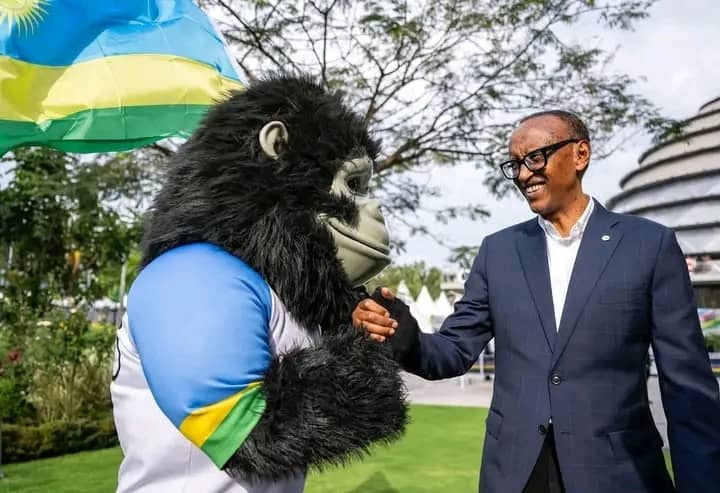
Any act of generosity, of forthrightness, of vision in leadership, any investment in joy, even the health of sport, must be a cover for crimes. I thought of this again when I saw Rwandan taskforces, buckets and sponges in hand, scrubbing trees dirtied by roadside dust before the #UCIWorldChampionship2025. And I don’t recoil anymore, it’s just funny.
If only our critics understood: we are not frightened by the word (or act of) “washing.” The trick is linguistic. Washing “solely as a means of twisted erasure” feels plausible to the lazy onlooker who refuses to interrogate the narrative further when African tales are proposed. It is the same laziness that props up labels like “authoritarian” and “benevolent dictator” to talk about our leadership.
It reminds me of philosopher Slavoj Žižek once noting that the leader who denies authority and instead seduces followers into affection is the real tyrant… like the parent who abdicates their responsibilities to feign mere friendship with their child, at the expense of said child’s upbringing. And yet it is Africans who deliver results that are branded tyrants.
Meanwhile, the kleptocrat, buttons straining across his shirt as every trip abroad he begs for aid, incapable of offering viable partnerships; the beer-bellied leader who returns home to hand out bribes like sweets to an otherwise starving population that hails him as “uncle,” is framed as harmless. It makes sense when one is lazy. Kagame in uniform intimidates, so that must be his intention.
Kagame, who refuses the physical indiscipline of the continent’s “happy thieves,” must be too harsh on his people. Kagame, who says pressure will not work here, is intolerable and “arrogant.” Kagame, who embodies social justice and Pan-African ambition, must be forcing us into progress we do not actually want. Because he is too sharp, and we, foolish Africans, too blunt, too round, not to get cut as he chisels this country into what any self-respecting nation would want for itself.
So the world comforts itself: the man who fought his way through the bush to liberate his people from an extermination attempt is dangerous, while the village tonton with mistresses in wigs worth a family’s annual income is the harmless and helpless figure.
How do we keep falling for such nonsense? “Sportswashing,” vraiment. Forgive us for liking sports. Forgive us the occasional wash, literal and metaphorical. The ruse is obvious. Kigali’s determination to keep itself clean has been twisted into obsession, a worrisome pathology.
The absurdities are familiar. You’ll hear the whispers abroad: “Yes, Rwanda is so clean… but I hear you get jailed for littering.” Imagine Africans so committed to littering that only the threat of prison could keep us from tossing fruit cores to the ground. So never mind that sport brings jobs, tourism, health, and unity. In Rwanda it must be coercion, conspiracy, a distraction from phantom graves.
And to prove it, critics cite old words of anti-Rwandans like Victoire Ingabire, who insists her life is under constant threat yet somehow outlives, by decades, actual patriots of far more relevance than herself—all while living on Rwandan soil. But let’s be serious here.
The Rwanda Development Board’s partnerships with Arsenal, PSG, Bayern Munich, Atlético Madrid, the LA Rams, and Clippers are dazzling. And they enrage those who need Rwanda’s reputation to stay fixed in blood and misery. For such critics, a thriving Rwanda is a threat to their salaries, their book deals, their high-minded lectures in European capitals. But facts remain stubborn.
So allow me to repeat myself (sorry, really) from an opinion piece published in 2021 in The New Times Rwanda, because our truth is just our truth and, unlike propaganda, truth does not age #LesFaitsSontTetus:
“Western Rwanda critics have commodified the pain that once defined Rwandan history and turned it into exorbitant appearance fees, book deals, and salaries. Kenneth Roth will have the gall to call Rwanda impoverished, as if the modern African is not informed on who impoverished it. It is the pillage of the moral-high-ground nations that has led us here. And the idea that we are striving to leave this state of economic subversion with movements such as Visit Rwanda, the state through which unethical lawyers can earn hundreds of millions to peddle lies, terrifies them. I suspect the sight of Visit Rwanda on Messi’s back caused the same panic in The Washington Post newsroom as Messi himself provoked in defenders. Nevertheless, he still scores time and time again, and so shall Rwanda.”
Veronique Nyiramongi Mbaye is a Rwandan-based writer and cultural commentator whose work focuses on East and West African post-colonial political movements, Pan-Africanism, and Afro-feminism. She has authored articles for Rwandan publications including The New Times and KT Press, and has been featured in the Pan African Review.