
Spain has withdrawn its ambassador to Israel, Ana Maria Salomon Perez, in the latest sign of worsening diplomatic relations between the two countries, according to a notice published Wednesday in Spain’s Official State Gazette.
The Spanish embassy in Tel Aviv will now be headed by a charge d’affaires, a source at Spain’s foreign ministry told Middle East Eye.
“The foreign ministry confirms the withdrawal of the ambassador to Tel Aviv, who was called back for consultations indefinitely, leaving the Spanish embassy in Tel Aviv under the leadership of a charge d’affaires, at the same level as the Israeli embassy in Madrid,” the source said.
The move reflects a deepening rift between Madrid and Israel that has intensified since Israel launched its military campaign in Gaza in October 2023.
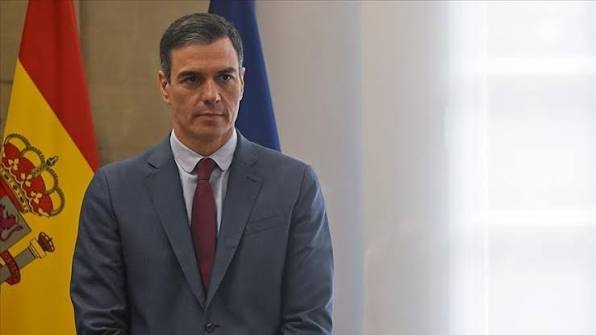
Spain’s Prime Minister Pedro Sanchez has been one of the most outspoken European critics of Israel’s actions in Gaza and has also condemned Israel’s military campaign against Iran, which it is carrying out alongside the United States.
Relations between the two countries have steadily deteriorated over the past two years. Spain recognised the State of Palestine in May 2024, a decision that prompted Israel to recall its ambassador from Madrid.
Spain later introduced several measures against Israel, including a full arms embargo. In 2025, Madrid also banned ships and aircraft carrying weapons to Israel from using Spanish ports and airspace.
Perez had previously been summoned back to Spain for consultations in September following a diplomatic dispute linked to those measures. With her withdrawal now indefinite, both countries are effectively without ambassadors, and their diplomatic missions are currently led by charge d’affaires.
Tensions have further escalated in recent weeks over the U.S.-Israeli war on Iran. Sanchez has strongly criticised the military campaign, describing it as illegal, and refused to allow the United States to use jointly operated military bases in southern Spain for operations linked to strikes on Iran.
The decision triggered a public dispute with U.S. President Donald Trump, who accused Spain of being “unfriendly” and threatened to cut off trade with the country after Madrid denied Washington access to the bases.
In a televised address earlier this month, Sanchez defended Spain’s stance.
“No to war,” he said, summarising his position in three words.
“One illegality cannot be met with another, because that is how humanity’s great disasters begin,” Sanchez said in the March 4 speech.
“All too often, great wars erupt due to a chain of events that spiral out of control, caused by miscalculations, technical failures, or unforeseen circumstances.”
“Therefore, we must learn from history and cannot play Russian roulette with the destiny of millions of people,” he added.
Sanchez said Spain’s position reflects its commitment to international law, the United Nations Charter, and the founding principles of the European Union, as well as to peace and peaceful coexistence between nations.