
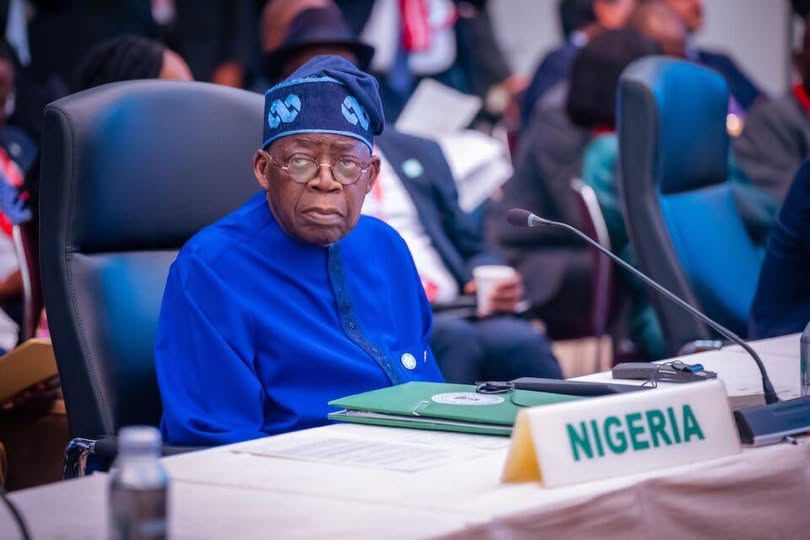
Nigeria has become an early and consequential theatre in a rapidly emerging global order where unilateral military action is increasingly used to advance national interests at the expense of international norms, according to a new report by SBM Intelligence titled Brave New World: Venezuela, Nigeria and the Implications of American Unilateralism on International Law, the Global Economy, and Investment in a New Strategic Age.
The report argues that the United States’ Christmas Day 2025 military operation in Nigeria was not an isolated counter-terrorism action but part of a broader strategic shift later mirrored by the January 2026 intervention in Venezuela. Together, the two cases mark what SBM Intelligence describes as a decisive break from post-Cold War multilateralism and a move towards enforcement-driven foreign policy.
“The U.S military intervention in Venezuela on 3 January 2026, resulting in the capture of President Nicolás Maduro, stands not as an isolated event but as the definitive enactment of a revolutionary US foreign policy doctrine. This action, preceded by the Christmas Day 2025 strikes in Nigeria and formally articulated in the 2025 National Security Strategy (NSS), signifies a deliberate and seismic shift in the post–World War II international order. The world is transitioning from a system governed, however imperfectly, by multilateral institutions and a norms-based framework towards an era defined by transactional sovereignty and unilateral enforcement.,” the report states.
SBM Intelligence notes that Nigeria’s experience is particularly significant because it illustrates how Global South states may increasingly be exposed to external military action justified through shifting narratives of security, humanitarian protection, and moral responsibility.
The report highlights the divergence between Washington’s framing of the Nigeria strike and the Nigerian federal government’s more restrained public response as evidence of growing ambiguity around consent, partnership, and jurisdiction.
“The contrasting narratives surrounding the strikes on Sokoto further illustrate the deliberate instrumentalisation of legal and ethical frameworks. The Americans framed that operation as a protection of religious minorities, while Nigeria simultaneously framed it as a routine counter-terrorism collaboration. This divergence is not merely rhetorical; it demonstrates how core international concepts such as sovereignty and genocide are becoming pliable instruments of political messaging rather than shared standards.
“The inevitable result is the accelerating fragmentation of the global order. Nations, particularly in the Global South, will be compelled to reassess their security and diplomatic postures not on the basis of universal norms, but on a cynical calculus of which interpretation of the law best serves their immediate survival or aligns with their bloc loyalties. This fragmentation will render multilateral institutions such as the UN Security Council increasingly paralysed and irrelevant, as demonstrated by the predictably divided reactions to the intervention in Venezuela, thereby accelerating the world’s division into competing normative blocs.” the report warns.
The economic implications for Nigeria and similar economies are substantial. SBM Intelligence argues that energy-producing countries are now being repriced by global markets based not only on fiscal health or governance indicators, but on their exposure to unilateral geopolitical action.
“The targeting of two major energy-exporting countries, Venezuela by invasion and Nigeria by precision strike, fundamentally reprices political risk in global commodity markets. The immediate fear is supply disruption, but the more profound, more structural shift is the internalisation of a new risk premium: the probability that a producer nation’s governance or geopolitical alignment could trigger unilateral Western intervention.
“This calculus now extends beyond traditional metrics of fiscal stability or corruption to encompass alignment risk. For energy-rich nations with perceived governance deficits or contentious relations with the West, the cost of capital will rise precipitously.
“Investment in long-term extraction projects will dry up unless underpinned by explicit security guarantees from a major power, effectively making economic development hostage to geopolitical alignment. This creates a vicious cycle where diminished investment leads to economic deterioration, which in turn fosters the very instability that could be cited to justify future intervention.” the report states.