
In this age of trends and viral moments, some creators are doing more than chasing clicks; they’re archiving culture.
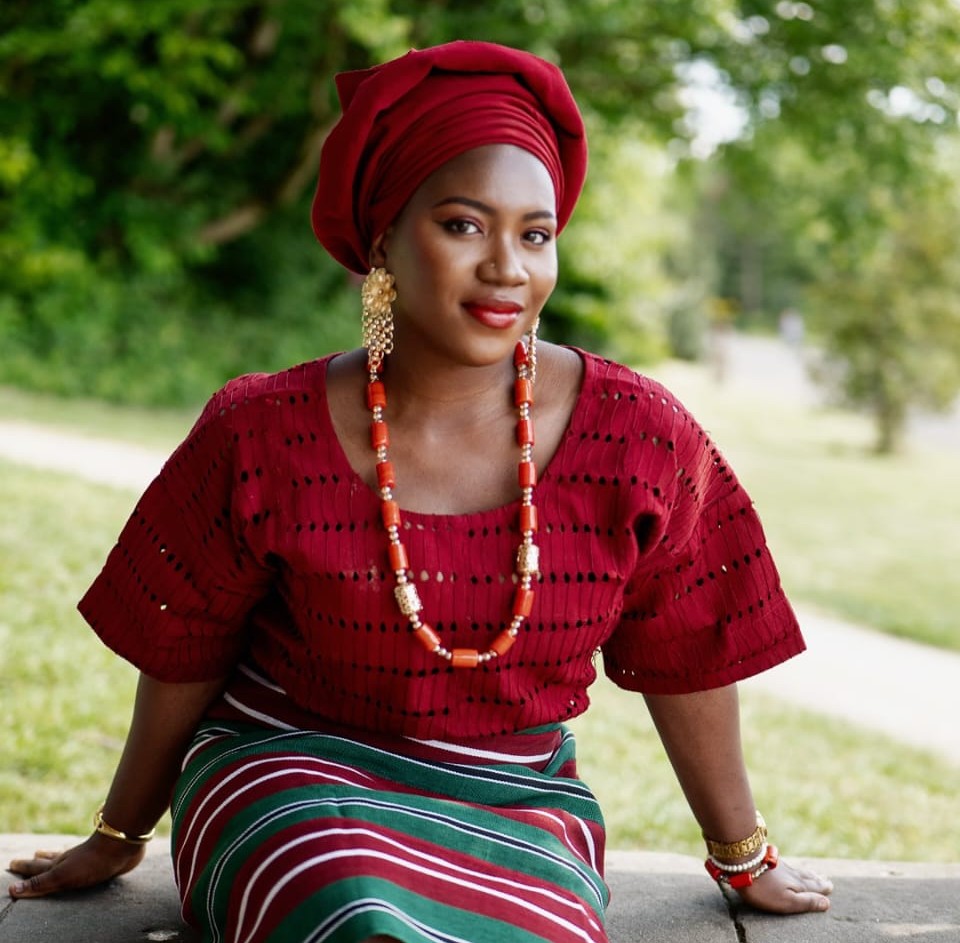
For Oyindamola Abbatty, better known online as YorubaChic, every post, reel, and caption is an act of reclamation. With her soft voice and vibrant aesthetics, she has become one of the most recognizable online advocates for Yoruba culture; documenting language, customs, and traditions that risk being forgotten in the noise of modernity.
“I grew up surrounded by Yoruba culture,” she tells me, “From Ikorodu to Makoko, my childhood was full of the language, music, and greetings. It wasn’t something I learned consciously; it was just life.”
But as adulthood arrived, so did perspective. “You start to notice that what you see as normal, others don’t even understand,” she says. “And that makes you realize how special your culture is.”
For Oyindamola, motherhood intensified that awareness. “Maybe it was becoming a mom,” she reflects. “I just developed this fierce protectiveness of my culture. I wanted my daughter to have something she could look back on; to see me talking with pride about who I am.”

The Digital Classroom
Before she became a culture creator, Oyindamola was a researcher and assistant lecturer at the University of Lagos. Academia gave her structure, but social media, she realized, offered something more powerful: visibility.
“Social media is the most democratic platform out there,” she says. “You don’t need funding or permission to build community or share knowledge.”
Her early videos were simple, short clips demystifying Yoruba language quirks or showcasing cultural practices. One of her first viral moments came from a playful video teaching a childhood slang language, Eno. “I didn’t even have makeup on,” she laughs. “It was just a fun memory I decided to share, and suddenly older people were commenting, ‘You just took me back to my childhood!’ while younger ones said, ‘What language is this?’ That’s when I realized how much we’ve lost and how much we can rebuild.”
The Cultural Disconnect
What caused that loss, I ask her. When did the chain of transmission between generations break?
“There was a time in Nigeria when speaking English became the cool thing,” she explains. “In school, you were punished for speaking Yoruba or Igbo or Hausa. We were literally conditioned to see our native languages as inferior. So, we grew up ashamed of them.”
She’s right. Many of us remember that punishment jar for “vernacular.”
But Oyindamola’s experience was different. Growing up with her grandparents meant nights under the moonlight, listening to folktales, and tuning into Yoruba radio dramas. “Those things grounded me,” she says. “Even if I didn’t fully understand their meanings then, they made me curious to learn.”
That curiosity now fuels her work. In her videos, she deconstructs everyday traditions; from the meanings behind Yoruba greetings to why certain hairstyles, songs, or fabrics exist. She calls it “cultural re-education for the digital generation.”

Reclaiming What Was Demonized
Our conversation drifts to religion, colonialism, and the spiritual roots of Yoruba identity; subjects many Nigerians still approach cautiously.
“Colonialism did us a huge disservice,” Oyindamola says. “It demonized everything that made us who we were. The same people who brought their religion here still celebrate their own indigenous myths; Greek, Norse, Roman. But ours were called ‘juju.’”
For her, the problem isn’t faith; it’s fear. “It’s ironic,” she adds. “The Yoruba religion never preaches against others, yet its followers face the most disrespect. All I’m saying is; stop calling our culture demonic. You don’t have to believe in it, but you must respect it.”
Appreciation vs. Appropriation
Cultural appropriation has become a global debate and YorubaChic has strong opinions.
“There’s a difference between cultural appreciation and appropriation,” she says firmly. “Appreciation is when you engage respectfully; like wearing traditional attire for a festival and acknowledging its origins. Appropriation is when you take without understanding or consent, and profit from it.”
She cites an example: foreigners and even other Nigerians labeling Yoruba wedding attire simply as “Nigerian traditional wear.” “There’s nothing like a Nigerian wedding outfit,” she laughs. “Nigeria has over 250 ethnic groups. When you call everything Nigerian, you erase the people who created it.”
Her advocacy also extends to economic fairness. “People are now mass-producing Adire prints in China,” she says. “Meanwhile, the Yoruba women who invented the craft don’t benefit. Cultural heritage should also mean protecting livelihoods.”
Building Legacy in the Global Era
Despite criticism from online trolls who accuse her of tribalism, Oyindamola remains resolute.
“If me saying I love my culture makes you uncomfortable, that’s your problem,” she says with a shrug. “It’s not tribalism; it’s self-respect. I’ve never insulted anyone’s culture. I just celebrate mine.”
Her audience extends far beyond Nigeria; from the UK and the U.S. to Togo and Benin. “I’m not even doing it for Nigerians alone,” she says. “I’m doing it for Yoruba people everywhere; for our children in the diaspora who want to reconnect. I’m doing it for my daughter.”
As our conversation winds down, I ask her for her favorite Yoruba proverb. She breaks into a smile and sings softly:
“Ohun tí àgbà bá rí ní jókòó, ọmọde kò lè rí tó bá gún orí ìgi.”
What the elder sees sitting down, the child cannot see even from the rooftop.
She laughs. “That’s the one that came to mind. Life teaches you what your parents tried to warn you about.”
A Living Civilization
For Oyindamola, Yoruba culture is a living, evolving civilization. “We’ve existed for centuries,” she says passionately. “We had industries, art, glassmaking, governance; long before colonialism. Yoruba isn’t just a tribe; it’s a civilization that spans countries and continents.”
From Togo to Brazil, the Yoruba footprint remains global and so does her mission. “If we don’t tell our stories,” she warns, “others will and they’ll get it wrong.”