
By Jeff Kelly Lowenstein
We’ve seen this script before.
An officer from a law enforcement agency shoots and kills a citizen.
The spokesman rapidly proclaims that the agent was in fear for their life and attacks the credibility and memory of the murdered person.
A radically untransparent investigation exonerates the officer.
The trust by the community in government that is a critical part of our democracy is eroded.
In 2007, while working for The Chicago Reporter, I did a story with photographer Carlos Javier Ortiz about fatal police shootings in the city. We built on the work that Rupa Shenoy had done for the publication which found that most police shootings happened in predominantly black neighborhoods, happened in clusters, and occurred when the police officers reported fearing for their lives.
We dug into the issue of accountability and whether the Chicago Police Department was doing enough to identify and prevent fatal police shootings. After sifting through hundreds of court filings and examining 85 fatal police shootings since 2000, we found that 45 percent of the 20 officers sued for shooting and killing someone had been sued before. In more than half of those cases, the officers had been sued for shooting someone else.
Yet almost all fatal police shootings appear to be declared justified. Pat Camden, the mustachioed and pugnacious spokesman for the Chicago Fraternal Order of Police (FOP), repeatedly spun false narratives about the victims and the incidents while stating on many occasions that the officer’s fear for their life justified the shooting.
The shootings occurred within a larger context of police impunity, according to University of Chicago law professor Craig Futterman. He found that the odds that a Chicago police officer who abused a citizen would be held accountable were less than two in 1,000.
John Conroy’s remarkable and impactful work for The Chicago Reader had revealed much of that abuse in the 1990s and 2000s. Story by story Conroy laid bare a decadelongs practice of torture led by Commander Jon Burge to extract confessions in Area 2, predominately black men. Burge and his officers used techniques like shocking genitals and deploying a wet bag over victims’ heads that the police employed in apartheid-era South Africa.
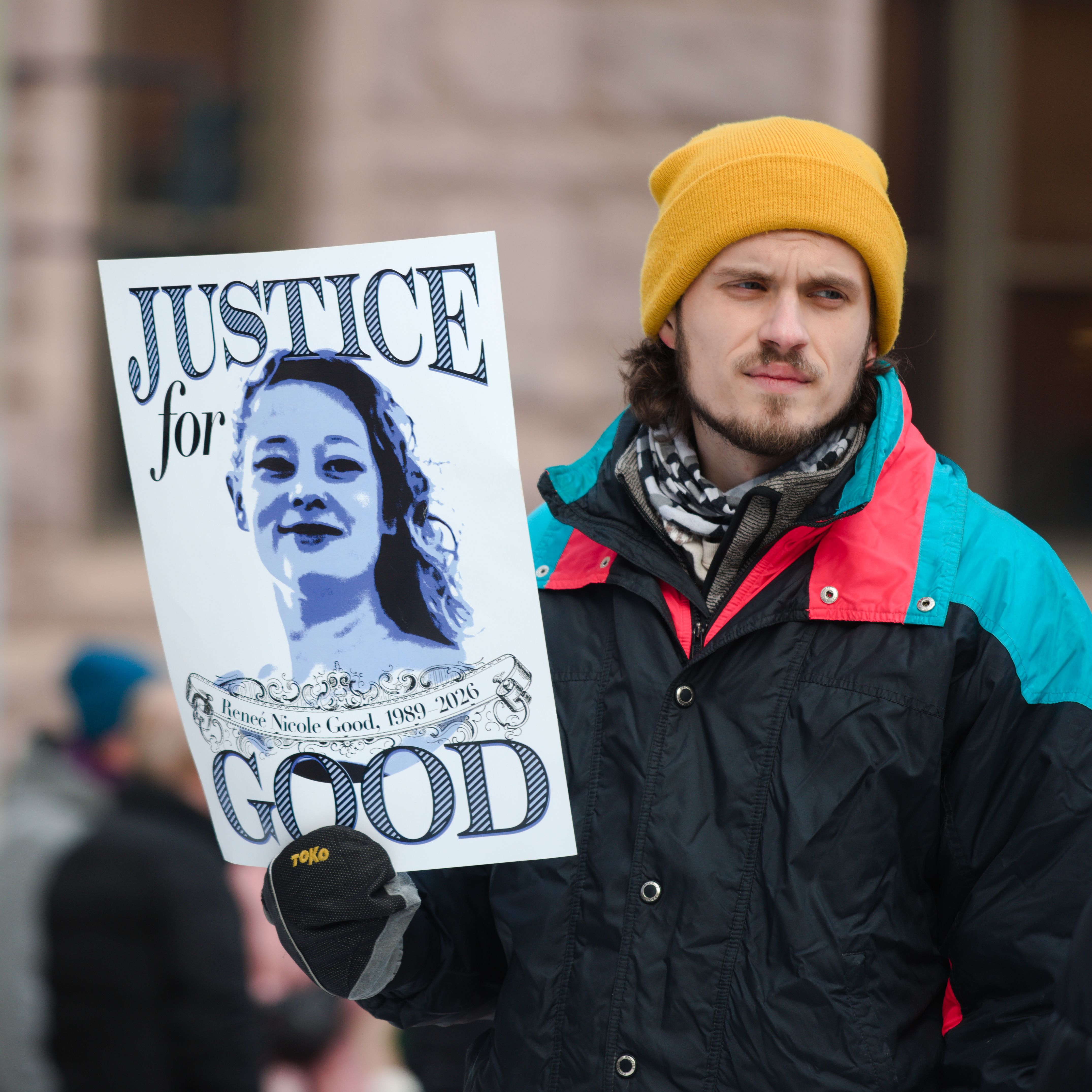
This brings us to the current moment of ICE and Minneapolis, where ICE officers have shot and killed Renee Good and Alex Pretti since the beginning of the year. It’s important to note first the inordinate amount of attention that these deaths have received relative to those people who have died in ICE detentino, the privileging of citizens’ lives over those people who are not documented.
The behavior we’ve seen from Trump administration officials and the president himself have aligned neatly with the patterns of the Chicago Police Department.
DHS Secretary Kristi Noem claimed that Good, who was behind the wheel of her car, “attempted to run a law enforcement officer over,” calling it “an act of domestic terrorism.”
Vice President J.D. Vance called Good’s actions “classic terrorism” and allocated responsibility for her death to her, saying it was a “tragedy of her own making,” adding that Jonathan Ross, the ICE agent who killed Good, is “protected by absolute immunity.”
In his initial post after Good’s death, Trump wrote that she was”obviously, a professional agitator, and the woman driving the car was very disorderly, obstructing and resisting, who then violently, willfully, and viciously ran over the ICE Officer, who seems to have shot her in self-defense”.
The same pattern has held true with the Pretti shooting,
In this case Noem said that Pretti, who was brandishing” a firearm, “arrived at the scene to inflict maximum damage on individuals and kill law enforcement.” She added that the agent, “fearing for his life and the lives of his fellow officers around him, an agent fired defensive shots.”
For his part, Greg Bovino, former Border Patrol “commander at large, characterized the agents involved in last weekend’s fatal shooting of Alex Pretti as the “victims”, and applauded the agents who responded for “taking him down,” according to USATODAY.
Federal officials have refused to let local authorities participate in the investigation of either shooting-in one case despite a court order.
Trump struck a more conciliatory tone earlier in the week saying that he and Minnesota Gov. Tim Walz had a productive conversation and agreeing to look at reducing the ICE presence in the city, which is about five times the size of the Minneapolis Police Department.
But the policy remains intact, ICE officers remain in the city continue, and Trump blamed Pretti for his death.
In short, change appears to be a long way away.
Change has come slowly to Chicago, too, through an informal coalition of journalists like Conroy, community activists, and lawyers like Flint Taylor and others.
Journalist Jamie Kalven’s successful lawsuit exposed the lies Chicago Police Depatrtment officers told about Laquan McDonald’s murder; the resulting fallout contributed to then-Mayor and potential future presidential candidate Rahm Emanuel’s decision not to run for a third term.
Accountability has come in certain cases. McDonald’s killer Jason Van Dyke was convicted of second-degree murder and aggravated battery, sentenced to prison, but released early in 2022 after serving about half his term, leading to further public outcry.
The fight continues.
In Minneapolis and around our country we are at a critical moment for our democracy. In his final act of his too-short life, Alex Pretti helped a woman exercising her constitutionally guaranteed rights to her feet. It falls to those of us who remain to take up the mantle, tell the truth about what happened and fight for justice, transparency, and what remains of our democracy that is under full assault in our beautiful, wounded and blood-soaked land.
Jeff Kelly Lowenstein is the founder and executive director of the Center for Collaborative Investigative Journalism (CCIJ) and an associate professor of journalism at Grand Valley State University.