
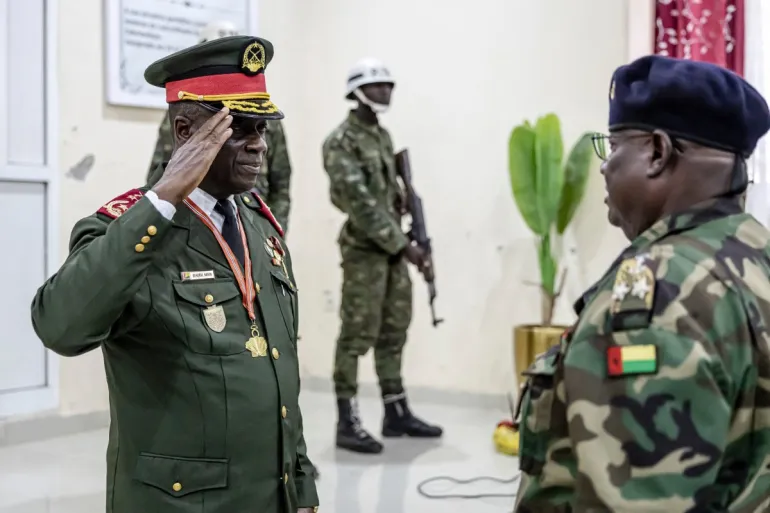
Soldiers in Guinea-Bissau seized control of the government on Wednesday, deposing President Umaro Sissoco Embaló and suspending the electoral process, just as the country awaited official results from the November 23 presidential and legislative elections.
Both Embaló and opposition candidate Fernando Dias had already declared themselves winners of the vote, raising tensions ahead of the announcement of results. Gunfire was reported around the presidential palace and the National Electoral Commission headquarters, sending residents fleeing and heightening fears of instability.
In a televised address, a group calling itself the High Military Command for the Restoration of National Security and Public Order said it had suspended all state institutions, closed national borders and imposed a curfew. The military accused political leaders of endangering national security and said it acted to “restore order.”
On Thursday, the military named Horta Inta-A Na Man, the army’s chief of staff, as transitional president for a one-year period. He pledged to stabilise the country and guide it back to normalcy under the authority of the “High Command.”
The African Union condemned the coup, demanded the immediate release of Embaló and other detained officials, and called for a swift return to constitutional rule.
The West African nation has a long history of political turbulence. Since gaining independence from Portugal in 1974, Guinea-Bissau has experienced repeated coups, attempted coups and periods of military rule — making this latest takeover part of a familiar pattern of instability.
As uncertainty deepens, many citizens and observers are watching closely to see whether the country will quickly return to democratic governance or enter yet another extended phase of military control.