
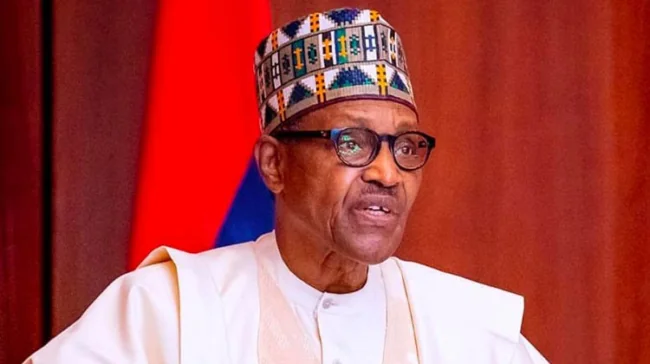
The news of Muhammadu Buhari’s passing yesterday in London serves as a stark reminder of a universal truth: all men must die. You who are reading, I who am writing—we will all die someday. This is an immutable fact. And with that in mind, we can talk about the legacy of a man whose actions affected over 200 million people.
While tradition often discourages speaking ill of the dead, such restraint risks whitewashing history and denying future generations the lessons that come from an honest appraisal of a leader’s impact. I daresay that many of those who are shrill in demanding silence on Buhari’s failings are dishonestly trying to whitewash him. That, to me, is quite ironic, because I came to the conclusion years ago that the man truly did not give a damn about what people thought of him.
To truly grasp Nigeria’s trajectory, we must examine the complex legacy of a man who governed the country twice—first as a military dictator, and later as a democratically elected president.
A Legacy of Contradictions
Muhammadu Buhari’s legacy is one of contradictions—a man of discipline who presided over institutional decay; a leader who promised change but left Nigeria more fractured. His tenure, marked by economic hardship, security failures, and democratic backsliding, leaves a bitter lesson: leadership requires more than rigid ideals; it demands vision, accountability, and genuine connection to the governed.
Buhari’s initial rise to power in 1983 was marked by a rigid, authoritarian style that prioritised control over human rights. His regime became synonymous with the suppression of dissent. Political opponents, activists, and journalists—including the iconic Fela Kuti—faced arbitrary arrests and prolonged detentions. Public floggings and executions without fair trials fostered a climate of fear. Decree Number 4 (1984) criminalised any reporting deemed critical of the government, setting a dangerous precedent for press freedom.
Economically, his policies were equally harsh. Though framed as necessary corrections, the austerity measures of 1984 triggered a severe contraction, worsening living conditions without delivering sustainable growth. His leadership style—inflexible and punitive—left an indelible mark, one that many Nigerians would recall decades later when he sought office again.
It is to my eternal regret that, knowing this about him in 2015, I allowed myself to believe that he had changed—and voted for him.
The Return: 2015 and Beyond
Buhari’s return in 2015 was met with cautious optimism. Hailed as a reformed democrat and anti-corruption crusader, he soon faced scrutiny over governance failures. His administration displayed a troubling erosion of judicial independence—exemplified by the prolonged illegal detention of figures like El-Zakzaky and Sambo Dasuki, despite court orders for their release. The suspension of Chief Justice Walter Onnoghen further undermined faith in due process.
The Twitter ban of 2021, which lasted seven months after the platform deleted one of Buhari’s posts, reinforced the perception of a leader intolerant of dissent. Such actions suggested a lingering authoritarian impulse—at odds with the democratic principles he was elected to uphold.
Economic Instability and Misguided Policies
Economically, Buhari’s second tenure was defined by instability. Nigeria plunged into two recessions, while policies like the border closure—implemented without consultation—spiked food inflation by over 300%. The ill-advised currency redesign caused severe cash shortages, crippling businesses and inflicting unnecessary suffering on ordinary citizens. Meanwhile, soaring national debt and unemployment painted a grim picture of economic stewardship.
As I noted in 2019, Buhari’s economic vision appeared strikingly narrow—fixated on a superficial anti-corruption campaign while failing to articulate a coherent strategy for national prosperity. His policies often seemed reactive, lacking the foresight needed to steer Nigeria toward sustainable growth.
Security Failures and Ethnic Divides
Perhaps the most damning aspect of Buhari’s rule was his handling of security. Despite campaigning on a pledge to crush Boko Haram, the insurgency persisted, while banditry and kidnapping metastasised across the country. The 2015 Zaria Massacre, where over 300 Shia Muslims were killed by the military, remains unresolved—emblematic of impunity. The Agatu Massacres of 2016 set the tone for the large-scale killings that have plagued Nigeria’s Middle Belt to this day. Buhari did nothing.
His government’s ineffective response to herder-farmer clashes, coupled with the controversial Ruga policy, inflamed ethnic tensions. The perception that his administration favoured his Fulani kinsmen deepened divisions, eroding Nigeria’s fragile social fabric. The Lekki Toll Gate Massacre of 2020—where security forces killed at least 12 peaceful #EndSARS protesters—further exposed a regime willing to use lethal force against its citizens.
A Detached Presidency
Critics highlighted Buhari’s inconsistencies and detachment throughout his presidency. In 2018, his contradictory statements on herders—first urging Nigerians to accommodate “your countrymen,” then claiming they were “foreigners from Libya”—raised questions about his mental acuity.
His absence during crises—such as his failure to visit victims of the Abule Ado explosion or address the country promptly on COVID-19—stood in sharp contrast to his attendance at trivial events like the Argungu Fishing Festival. His misplaced priorities were glaring. In 2021, while remaining silent on weekend massacres in several states, he swiftly mourned a religious leader’s death—a telling indicator of where his sympathies lay.
A Death Abroad, A Presidency Disconnected
Buhari’s death abroad carries profound symbolism. Despite billions of naira allocated to the State House Clinic—₦3.94 billion in 2015, ₦3.87 billion in 2016, ₦3.2 billion in 2017, and more in subsequent years—he consistently sought medical care in London.
This disparity underscores a leader who failed to fix the very system meant to serve him, let alone ordinary Nigerians. His final moments in a foreign hospital, far from the country he led, serve as a fitting metaphor for a presidency that often felt disconnected from its people.
History will judge him not by intentions, but by outcomes.
And for many Nigerians, those outcomes remain a story of promises unkept and potential unfulfilled.
Nwanze is a partner at SBM Intelligence.